

What You Really Need to Do Food Photography in Dubai (From Someone Who’s Been There)

Updated: Apr 11
What Nobody Tells You Before You Start
Dubai's food scene is genuinely unlike any other market I know of. In a single afternoon you can move from shooting a tasting menu at a hotel restaurant with a Michelin-starred executive chef to photographing a hidden shawarma spot in Deira that does more covers in a dinner service than most European restaurants do in a week. The range is extraordinary. The pace is relentless. And the expectations, on both sides of the camera, are high.
After more than a decade shooting food and product photography in Dubai, there are things I know about working in this market that I wish I had been told at the beginning. Not the photography fundamentals, the lighting principles, the composition rules, those you can read anywhere. The specific things that make doing this work in Dubai different from doing it anywhere else.
This is that conversation. Practical, specific, and honest about what actually matters when you are working in this city's food photography scene, whether you are a professional photographer building a client base, a restaurant owner trying to produce better content, or a food brand trying to understand what you should be asking for.

1. Understand the Scene Before You Step In
The first thing to understand about food photography in Dubai is that the industry infrastructure around it is still developing. In major Western food photography markets, there is a well-established ecosystem: professional food stylists, prop houses, specialist food photography studios, established day rates, and a shared professional vocabulary between photographers and clients. In Dubai, parts of that infrastructure exist but not all of it, and not consistently.
The most significant practical consequence of this is the food styling situation. Most restaurants in Dubai do not have dedicated food stylists, and most food photography briefs do not include a separate budget for one. The chef plates the dish for service, and the expectation is that the photographer either works with that plating or has enough styling knowledge to improve it without overstepping the chef's territory.
This is not a problem to be solved. It is a condition of the market to be adapted to. The food photographers who build the strongest reputations in Dubai are the ones who can bridge the gap between the kitchen's plating and the camera's requirements: who know enough about food styling to improve a dish's presentation for the camera without requiring a dedicated stylist to do it. This dual capability, photographer plus basic food stylist, is one of the most commercially valuable things you can develop in this market.
The Speed of the Market
Dubai's food market moves fast. New restaurants open at a rate that regularly surprises even the people working in the industry. Cloud kitchens have proliferated dramatically, creating a large segment of the market that needs professional food imagery for delivery platforms and social media but operates without a physical space, without a styling budget, and often without much lead time. Boutique cafes open and establish followings within months. Established brands refresh their visual content seasonally.
This pace creates constant opportunity. There is always a new restaurant that needs photography, always a brand that needs a content refresh, always a delivery platform listing that is underperforming because the imagery is not good enough. The photographer who is positioned and visible in this market, who has a clear portfolio and a clear offer, will not run short of work.
2. Pack Light — Your Back and Your Efficiency Will Thank You
Space is a practical constraint in Dubai food photography that catches a lot of photographers out. The assumption, coming from markets with more established photography infrastructure, is that shoots happen in studios or in large, purpose-built restaurant spaces where there is room to set up a proper lighting rig, move freely around the subject, and have all your gear accessible at once.
The reality of working with Dubai's restaurants is often very different. Cloud kitchens, by definition, have no dining space. Many boutique cafes and concept restaurants operate in compact spaces where the aesthetic is more important than the square footage. Even established restaurants often have service happening simultaneously with the shoot, which means you are working around moving staff, hot food, active kitchen operations, and customers who may be eating ten metres away from your tripod.
The photographers who work effectively in these conditions are the ones who have learned to shoot a full professional brief with a minimal kit. One camera body. Two lenses. A compact continuous light. Two reflectors. A small bag of styling props. This is the kit that fits in a single rolling case, sets up in ten minutes, and produces images that are indistinguishable in quality from images produced with twice the equipment by a photographer who has not learned to work efficiently.
Efficiency in tight spaces is a skill that develops through practice and intentionality. Before every shoot, I think about which lighting setup will produce the results I need in the space I am going into. I think about where the camera needs to be positioned for the angles I want, and whether there is enough room for that position given what else will be happening in the space. I think about what I can leave in the car. The answers to these questions shape the kit I bring, and the kit I bring shapes how freely I can work.
3. The Gear That Actually Works in Dubai's Restaurant Reality
The right kit for food photography in Dubai is not the most expensive kit or the most comprehensive kit. It is the kit that handles the specific challenges of this market consistently: variable and often poor ambient lighting, tight spaces, fast turnarounds, and a wide range of food subjects from the fine textures of Middle Eastern pastry to the bold colour contrasts of South Asian street food.
Camera Body
A full-frame mirrorless or DSLR camera body is the baseline for professional food photography in Dubai because full-frame sensors handle the low-light conditions of restaurant environments better than crop sensor alternatives. Many Dubai restaurants use dramatic, low ambient lighting as part of their aesthetic, which means the camera needs to produce clean, usable images at ISOs that would introduce significant noise in a less capable sensor. The specific brand matters less than the sensor quality and the autofocus performance of the body.
Lenses
Two lenses cover the vast majority of food photography situations in Dubai. A 50mm prime is the workhorse for wider compositions, environmental shots, and any situation where the dish needs to be shown in its spatial context. It produces a natural, undistorted perspective that communicates food the way the eye sees it, which is exactly what delivery platform and menu photography requires.
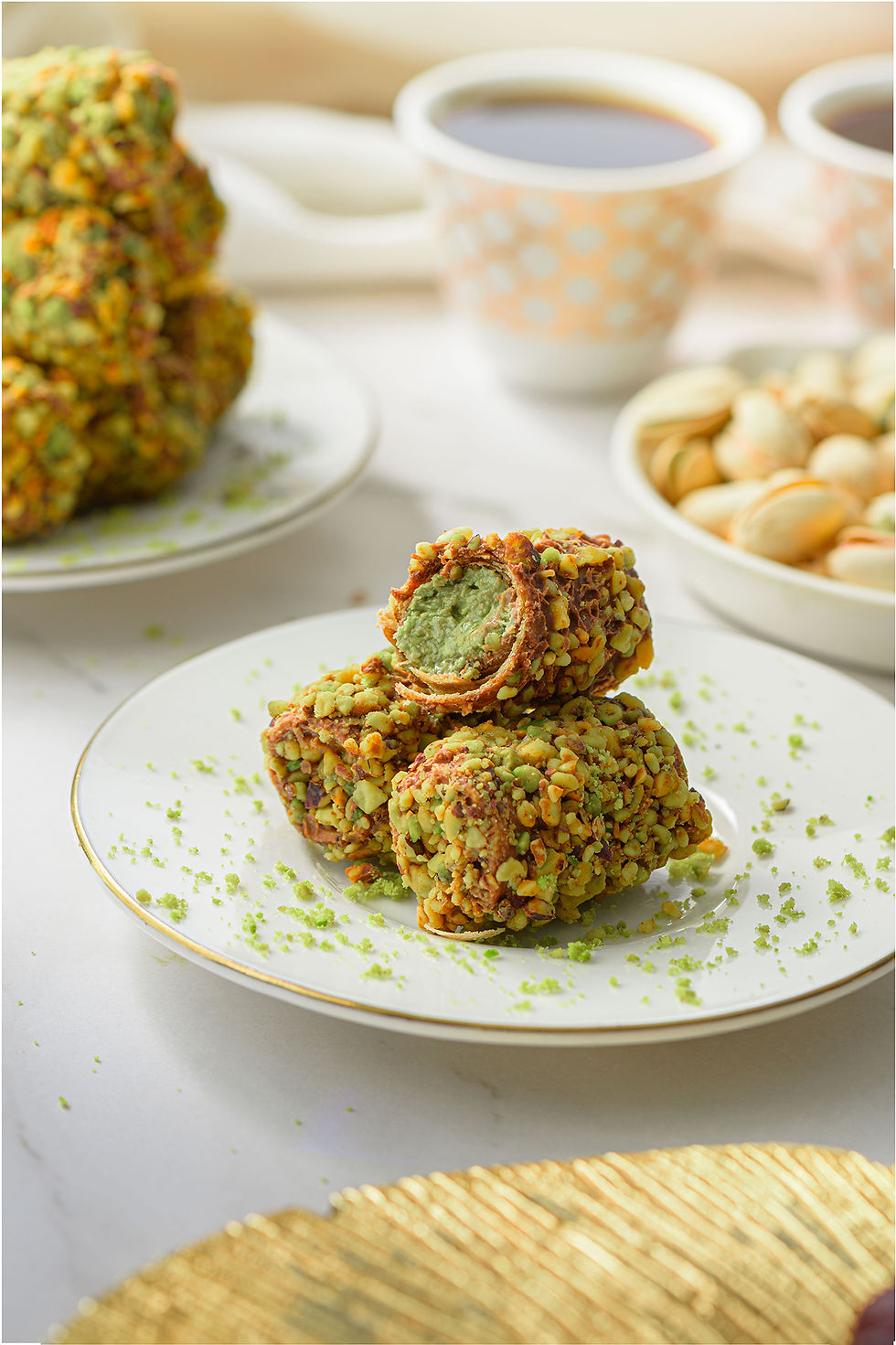
The 100mm macro is the specialist tool for close-up detail work: the texture of a pastry surface, the glisten of a sauce, the cross-section of a layered dish that reveals interior quality. At this focal length and close distance, the optical quality of the lens becomes directly visible in the sharpness of fine textural detail. It is also the lens that creates the background separation, the blur of the restaurant environment behind a sharp-focused dish, that communicates a professional-quality food photograph.
Lighting
A portable continuous light, a small LED panel with a diffusion attachment, is the most practically useful artificial lighting tool for restaurant food photography in Dubai. Unlike flash, which requires a separate trigger and produces a light that the ambient eye cannot preview, continuous light shows you exactly what the camera will capture. You can see the shadows, see the highlights, see how the light is falling on the food, and adjust before you fire a single frame.
Position the continuous light at a 45-degree side angle to the dish, matching the direction that window light would come from in an ideal natural light setup, and you have a controllable, repeatable lighting system that produces professional results independently of the restaurant's ambient conditions.
4. The Soft Skills That Keep You Booked
Technical photography skills get you into the room for the first shoot. Soft skills determine whether you get called back, whether you get recommended to other clients, and whether you build the kind of ongoing relationships that are the foundation of a sustainable professional practice in this market.
Communication Across Cultures
Dubai's food industry is genuinely one of the most multicultural working environments in the world. On a single shoot day I might be working with a head chef from Italy, a restaurant owner from Lebanon, a marketing manager from India, and a kitchen team from the Philippines and Bangladesh. Each of these working relationships requires a different communication style, a different level of formality, a different approach to giving direction and receiving feedback.
The photographers who build strong reputations in Dubai's food market are almost always people who are genuinely comfortable working across cultural boundaries: who can communicate clearly and respectfully in any of these configurations, who understand that directness is appropriate in some cultures and deference more appropriate in others, and who can navigate the implicit hierarchies of a professional kitchen without either overstepping or underfunctioning.
Speed and Adaptability
Hot food is the most time-sensitive subject in professional photography. A dish that looks perfect on the plate at the moment it comes out of the kitchen may look significantly less perfect fifteen minutes later as it cools, loses steam, allows sauces to constrict, and generally stops behaving the way the chef intended. The time window for photographing many dishes is genuinely narrow.
Shooting fast without shooting carelessly is a skill that develops through a specific combination of preparation and confidence. The preparation side is having the camera settings, the lighting setup, and the composition approach all decided before the dish arrives on set. The confidence side is trusting those decisions and executing them quickly rather than second-guessing and losing the window while deliberating.
I time my setups before the food arrives. I know what settings I am shooting at, I know what angle I want for the hero shot, I know what additional angles I will move through after the hero. When the chef puts the dish down, I am already moving. The difference this preparation makes to how the food looks in the final images is significant.
Cultural Sensitivity in Visual Language
Understanding the visual language of the food you are photographing is one of the skills that most clearly separates photographers who genuinely understand Dubai's food market from those who are applying generic food photography conventions to a market that has its own specific aesthetic references.
Emirati and Arabic food has a specific visual language: the warmth and generosity of the presentation, the specific colour palette of the ingredients, the cultural significance of particular dishes and occasions. South Asian food has its own visual language that is completely different in palette, composition, and the emotional register it is meant to communicate. East Asian cuisine has precision and colour specificity that requires a different approach again.
The most effective food photography for each of these categories speaks the visual language of that food culture rather than translating it into a generic international food photography aesthetic. Audiences can feel the difference between a photograph of Arabic food that genuinely understands what it is communicating and one that is treating the subject through the lens of a culinary tradition it does not belong to.
5. The Opportunities Worth Chasing in Dubai's Food Market
Dubai's food photography market has specific segments that offer the most accessible and sustainable work, and understanding how they differ from each other in terms of brief type, budget expectations, and the kind of working relationship they typically involve is practically useful for anyone building a professional food photography practice here.
Cloud Kitchens
Cloud kitchens are the fastest-growing segment of Dubai's food market and one of the most underserved in terms of quality food photography. They have no physical dining space, which means the delivery platform image and the social media content are the primary customer touchpoints for every dish they sell. The quality of those images directly affects order conversion. Yet many cloud kitchen operators are working with phone photography or very basic imagery because they either do not yet understand the commercial impact of better photography or do not know what professional food photography costs relative to the return it produces.
For a food photographer, cloud kitchens represent a market segment where the value of professional photography is directly measurable in the client's order data, where the briefs are often repeatable and volume-based, and where relationships can develop into ongoing retainer work. The challenge is that the average budget per shoot tends to be lower than for established restaurant clients, which means efficiency, the ability to shoot a volume of dishes quickly and to a consistent professional standard, is the operational skill that determines profitability in this segment.
Boutique Cafes
Dubai's boutique cafe scene is one of the most active and visually sophisticated in the region. Cafe owners in this market understand that their Instagram presence is a significant part of their brand and customer acquisition strategy, and many of them invest accordingly in the quality of their visual content. The working relationships in this segment tend to be more collaborative and ongoing than single-shoot transactional arrangements.
A food photographer who builds a genuine ongoing relationship with a boutique cafe, producing content for them monthly and developing a visual identity that grows with the brand, is in a significantly stronger commercial position than one who shoots for a client once and moves on. The relationship itself is an asset, and in the boutique cafe segment there is genuine appetite for that kind of ongoing creative partnership.
Premium Restaurants
The premium restaurant market in Dubai is competitive to enter and the briefs are demanding, but it is where the most commercially significant portfolio work comes from. A hotel restaurant shoot, a celebrity chef's Dubai outpost, a Michelin-starred or Michelin-aspiring establishment, these are the credits that position a food photographer in the upper tier of the market and that attract the clients who understand what professional food photography is worth.
Getting into this segment requires a portfolio that demonstrates you can work at the required level: that you understand premium food presentation, that you have the technical capability to produce images that meet the visual standards of international media, and that you can work efficiently and professionally in the complex environment of a high-end restaurant kitchen.
6. Behind-the-Scenes: What the Work Actually Looks Like
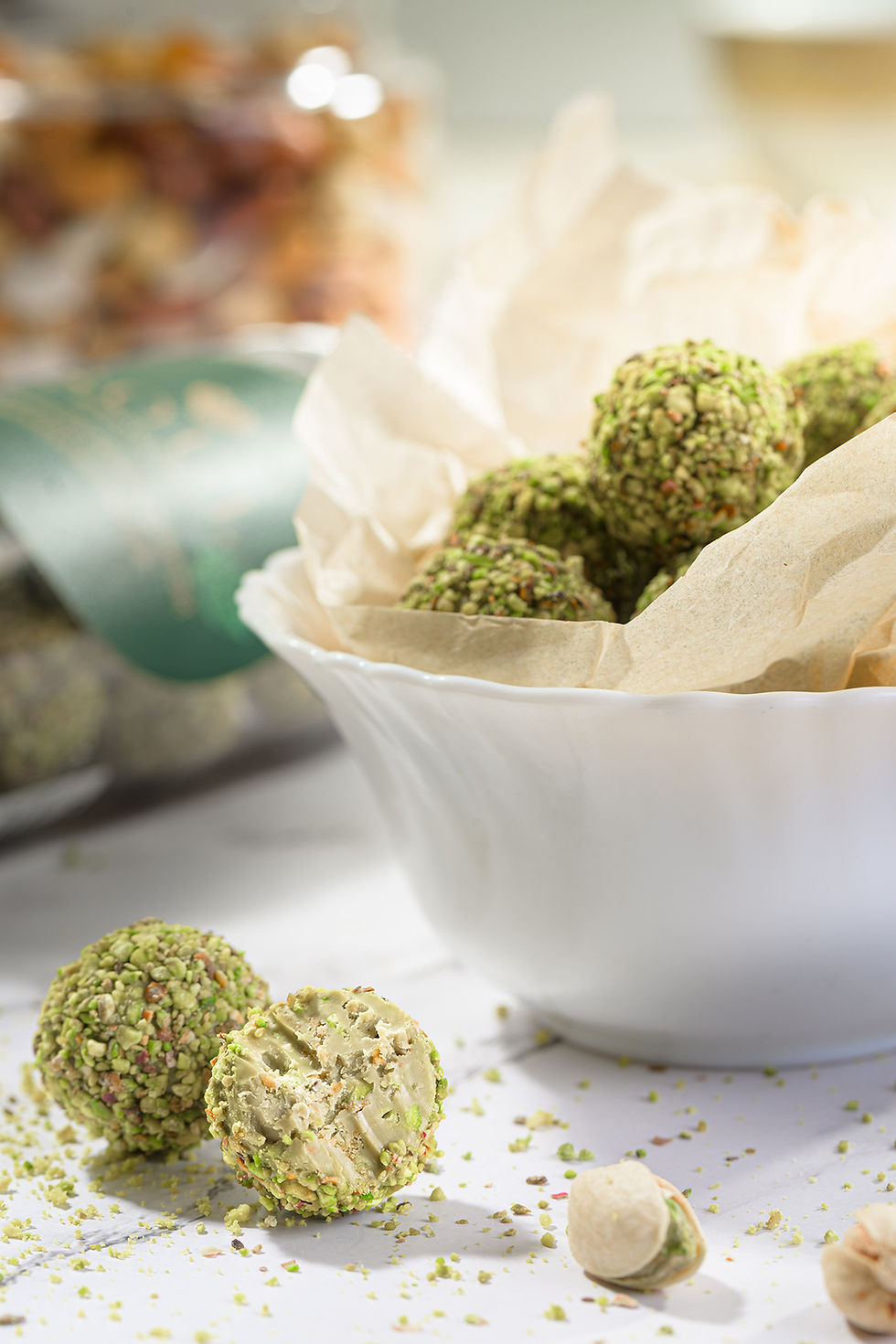
One of my earliest shoots in Dubai was in a café barely bigger than my living room. I had my camera, one light, a reflector, and barely two feet to move. The chef plated a gorgeous stack of pancakes, but there was no stylist, no props budget, and no time to wait. I grabbed a fresh sprig of mint from the kitchen, rearranged the berries slightly, and dusted a little extra powdered sugar from behind the counter. Ten minutes later, the shot looked like something from a cookbook. The client was thrilled.
That shoot taught me something I still think about on every job: Dubai food photography is not about the conditions you have. It is about what you make from the conditions you have. The space was tight, the budget was modest, the time was short. But the brief was clear and the food was genuinely good. My job was to translate the quality that was already there into an image that communicated it effectively.
That translation task, making real food quality visible through a camera under real working conditions, is what professional food photography in Dubai actually is. Not a perfectly controlled studio environment. Not unlimited time and budget. A real kitchen, real food, real constraints, and the expertise to produce excellent images within all of them.
7. Building a Professional Food Photography Practice in Dubai
Positioning and Visibility
Dubai is a market where referrals drive a significant proportion of professional work across most service categories, and food photography is no exception. A satisfied restaurant client who recommends you to another restaurant in their network, or a boutique cafe owner who mentions your name in a industry WhatsApp group, can generate more new client work than any amount of direct marketing.
This means that the quality of your work and the experience of working with you are the primary marketing instruments in this market. Clients who are genuinely impressed by both will recommend you. Clients who found the work good but the working process frustrating or difficult are unlikely to refer you regardless of how the images turned out.
The Portfolio Strategy
Building a food photography portfolio in Dubai requires specific strategic thinking about which work to prioritise and which to include in the portfolio you show to potential clients. The goal is not to show every type of food photography you have done. It is to show the specific types of work that attract the specific clients you want to work with more of.
If you want more premium restaurant work, your portfolio should lead with premium restaurant work. If you want more café and brunch content clients, the portfolio should be weighted toward that aesthetic. The portfolio is not a record of everything you have shot. It is a signal to potential clients about the category of work you are positioning yourself to do.
Understanding Pricing in the Dubai Market
Pricing professional food photography in Dubai requires understanding the market range and positioning your rates relative to it in a way that reflects the quality of your work and attracts the right clients. Rates that are too low signal that the work may not be at the professional standard that premium clients require. Rates that are significantly higher than the market range without a portfolio that clearly justifies the premium will limit your ability to get into the market segments where that premium is appropriate.
8. The Photography Craft That Matters Most in This Market
I have talked about the market context and the soft skills. Let me be direct about the specific photographic craft decisions that matter most for producing excellent food photography in Dubai specifically.
Natural Light Management
The best natural light in Dubai for food photography is the morning light from east-facing windows in the cooler months. It is warm, directional, and soft enough to be flattering to almost any food subject without requiring diffusion. If you can build a client shoot schedule around this light, the quality improvement over shooting under restaurant ambient lighting is immediately visible.
Managing Dubai's intense direct sunlight during summer shoots requires either diffusion, a sheer curtain or diffusion fabric across the window, or a shift to artificial lighting that you can fully control. The worst possible approach is to shoot under a combination of harsh direct sun and restaurant interior lighting simultaneously, which creates colour casts and contrast levels that are difficult to correct in post-production.
Food Styling on Set
In Dubai's market, where food styling is frequently the photographer's responsibility as well as a dedicated stylist's, a small kit of styling tools is as important as the camera gear. Precision tweezers for positioning garnishes. A small brush for applying sauces with precision. A spray bottle with water for maintaining freshness on produce. A palette knife for adjusting sauce placement. A small set of neutral-toned cloths and surfaces for backgrounds.
These tools, combined with the understanding of what makes food look its best on camera, allow you to improve almost any dish's camera readiness in the time between the chef placing it down and your first frame. The improvement that five minutes of basic styling makes to an otherwise excellent photograph is consistently significant.
The Shot List Discipline
Working in Dubai's fast-moving restaurant environments requires having a clear shot list before you arrive on set. Not a rigid script, but a clear hierarchy: the hero shots that the brief absolutely requires, the secondary shots that add value to the image library, and the additional angles or details that are worth capturing if time allows. Working through this hierarchy deliberately rather than improvising ensures that the most important images are always captured regardless of how much time is available.
A shot list also makes the client conversation much easier. When the client can see exactly what is planned before the shoot begins, the likelihood of discovering a misalignment between expectations and planned execution on the shoot day itself, which is the most expensive place for that discovery to happen, is dramatically reduced.
9. Why Dubai Is One of the Best Markets in the World for This Work
I have worked across different markets and come back to Dubai each time because of what this city offers to a food photographer with genuine craft and ambition. The range of food cultures represented here is extraordinary. In the course of a week you can photograph Emirati heritage cooking, South Asian street food, European fine dining, East Asian cuisine, North African food, and a dozen fusion concepts that exist nowhere else in the world. For a food photographer, that range is a continuous creative education.
The pace of growth in the market means that there is always new work. The premium standard that Dubai's hospitality sector sets means that clients who understand what excellent photography looks like are not rare here. And the city's position as a global hub means that the imagery produced here travels: food photography from Dubai appears in international media, reaches global audiences, and builds professional reputations that extend well beyond the city itself.
None of this means the work is easy. It means the work is genuinely worth doing well. And in a city where the standard is high and the opportunities are real, doing it well is both the challenge and the point.

One More Thing
The story I told about the tiny café and the pancake shoot is not an exceptional story. It is a Tuesday. Dubai food photography is full of situations where you have to produce excellent results from imperfect conditions, where the space is smaller than ideal, the light is what it is, the time is tight, and the food is genuinely great and deserves to look it.
The photographers who thrive here are the ones who are energised by that challenge rather than frustrated by it. The ones who see a tight kitchen and limited time as a creative problem to be solved rather than a professional shortcoming to be apologised for. The vision to see what the image needs to be. The craft to produce it in the conditions that are actually available. That combination is what food photography in Dubai requires, and what it rewards.
Ready to make your food look the way it deserves to in this city?
At Spinthiras Media, Dubai's food market is where we work every day. If you want to talk about what your brand or restaurant needs visually, let's start that conversation.


Comments