

Packaging Photography for UAE Brands: How the Box, Bottle, or Bag Sells Before the Product Does
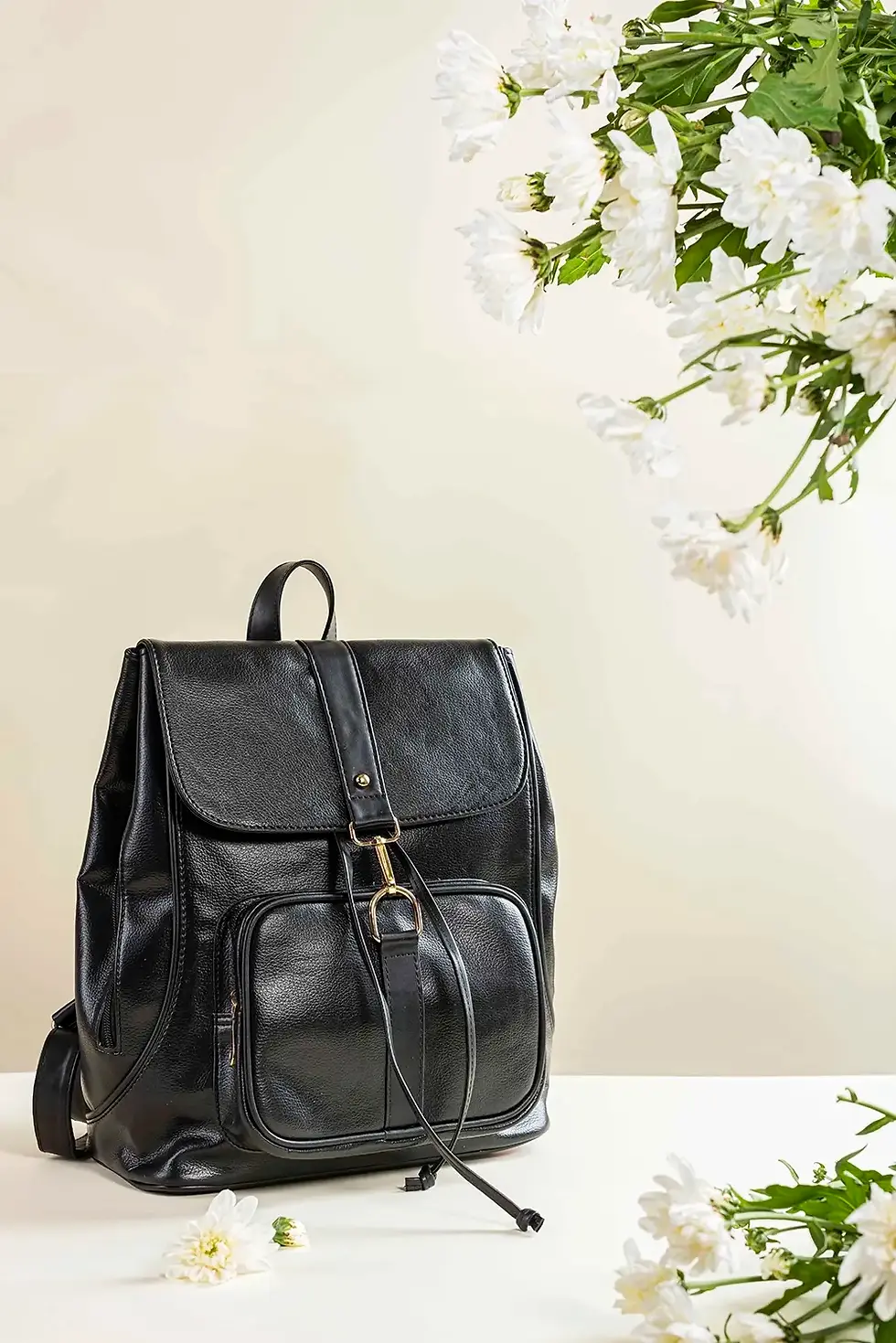
Walk down any aisle in a UAE supermarket and notice what your eye lands on first. Not the product. The packaging. The box, the bottle, the bag, the pouch. That is the first physical thing a customer meets, on a shelf and increasingly on a screen, and it is doing the selling before the product ever gets a word in. Yet most brands pour their attention into shooting the product and treat the packaging as an afterthought.
That gap is the whole subject of this piece. Packaging photography is its own discipline, with its own technical problems and its own commercial logic, and the brands that understand it are selling the promise of the product before anyone has opened the box.
The Campaign That Sold a Product Without Showing It
Shreya: You mentioned a shoot where the entire brief was to not show the product. Walk me through that.
Ibrahim: This was for a very big brand, one I will not name. The product was already known to be excellent, and everyone in the market knew it. So the brief was unusual. They did not want to talk about the product at all. They only wanted to talk about the packaging. The foil, the embossing, the transparent glossy elements, all of it saying one thing. What you are going to get inside this box is going to be premium.
Shreya: So the packaging had to carry the entire message on its own.
Ibrahim: Completely. As a team we executed it so well that it measurably lifted curiosity about the product before the product was ever shown. That was the whole idea. Make people want to know what is inside, purely through how the outside was photographed. No hero shot of the product. Just the box, lit and styled so it promised something worth waiting for.
When the packaging is shot with enough intent, the box stops being a container and becomes the advertisement. The customer is sold on the promise before the product introduces itself.
Why the Box Is Often Harder Than the Bottle

Shreya: Most brands assume that once they have cracked product photography, packaging is the easy part. Why is that wrong?
Ibrahim: Because it is usually the other way around. Most of the time, packaging is harder to shoot than the bottle. And the reason is almost cultural inside the brand. Every brand works incredibly hard on the bottle. The bottle gets all the attention, all the retouching, all the care. The packaging gets a softer effort. So when it comes time to photograph it, the packaging has more unsolved problems and less thought behind it, which makes it harder to make attractive.
Shreya: And attractive packaging matters more than brands think.
Ibrahim: It matters enormously, because people see the packaging before they see the product. On a shelf, on a listing, in an unboxing video, the packaging is the first impression. If the box looks flat and cheap in the photo, the customer has already downgraded the product in their mind before they have seen it. Getting the packaging to look as considered as the product inside is not a nice-to-have. It is the first thing doing the persuading.
The Material Problems: Foil, Holographic, Gloss, and Embossing
Shreya: Let us get technical. Foil, embossing, transparent windows, holographic finishes, matte versus gloss. Which is genuinely the hardest to shoot, and how do you make each one read on camera?
Ibrahim: The hardest are the reactive finishes, foil and holographic, because they behave differently in different light and they do not behave the same as each other. Foil will throw a hard, mirror-like reflection depending on the angle of the light and the angle of the camera. Move either by a few degrees and the whole surface changes from bright to dead. Holographic is a separate problem again, because it fractures light into colour, and if you are not controlling it deliberately, it looks like noise instead of a finish.
Ibrahim: As a team we have shot more than twenty subjects specifically on gloss and holographic finishes, and the way you solve it is by controlling reflection rather than fighting it. You use raking light at a deliberate angle to reveal embossing and texture, so the raised areas catch light and the recesses hold shadow, which is what makes embossing actually read as three-dimensional instead of flat print. For foil and gloss you carve the reflections with black cards and flags, deciding exactly where the highlight sits and where the surface goes clean and dark. You are not lighting the box. You are sculpting what the box reflects. Done right, a box of gloss and holograph becomes genuinely fun to look at, more interesting than the product itself.
Shreya: And matte finishes, are those the easy ones by comparison?
Ibrahim: Easier, but they have their own trap. Matte absorbs light and can look lifeless if you do not build in some directional light to bring out the texture. The mistake is lighting matte flat because it is forgiving. Even a matte box needs a light that gives it form, or it photographs like a grey brick.
Shreya: What about transparent windows, the little cut-outs that show the product through the packaging? Those seem like they should be simple.
Ibrahim: They are one of the sneakiest. A transparent window means you are now lighting two things at once, the packaging and the product visible through it, and they almost never want the same light. If you light the box beautifully, the product behind the window goes dark or picks up a reflection on the plastic. If you light the product through the window, the box around it flattens. You end up managing reflections on the window film itself, which is a third surface with its own behaviour. We usually light them as two separate problems and blend, because trying to solve both with one light gives you a compromise that flatters neither.
Packaging photography is not about pouring light onto a surface. It is about deciding, reflection by reflection, what the surface is allowed to show the camera.
The Small Thing That Quietly Ruins a Packaging Shot

Shreya: Is there a detail brands never notice that separates a professional packaging shot from a rushed one?
Ibrahim: The edges. This sounds tiny, but it is constant. When packaging is manufactured and cut, the edges are almost never perfect. The flaps do not always close cleanly, the cut edges are slightly rough, there is a small imperfection where the box was folded or sealed. To the eye in a shop it is nothing. To a camera, up close and well lit, it becomes obvious and it makes the whole thing look cheap.
Every single time we shoot packaging, we check for this before we shoot, not after. We make sure the flaps sit right, the edges are clean, the box is presented at its best. It is a small discipline that most people skip, and it is the difference between packaging that looks premium and packaging that looks like it came off a fast line.
The UAE Difference: Gifting, Unboxing, and the Supermarket Shelf
Shreya: How is packaging photography for a UAE brand different from anywhere else?
Ibrahim: Three things pull it in a specific direction here. Gifting culture is huge, so packaging often has to photograph as something you would be proud to hand to someone, not just something functional. Unboxing content is enormous, which means the packaging has to look good in motion and from the customer’s own point of view, not only in a clean studio still. And direct-to-consumer launches mean the first time a customer ever touches the brand is when the box arrives, so that box is the entire first impression of the company.
Shreya: Does the retail context change how you shoot too?
Ibrahim: Very much. Right up until last month we were doing a packaging shoot for Mad’hoor Supermarket, and it was purely packaging, with a lot of styled shots built specifically around how the packaging looks. Because in the eyes of a supermarket shopper, you see the packaging first and the product second. So the styling has to win on the shelf, and on the listing thumbnail, before the product itself ever gets considered. That is a different job from a clean isolated packshot, and it is the job that actually sells in a retail environment.
In a UAE supermarket or a UAE inbox, the packaging is the storefront and the product is the shop inside. Shoppers decide whether to walk in based entirely on the storefront.
Shreya: Should the packaging photography match the product photography, or is it a separate visual language?
Ibrahim: It has to feel like one family. When the packaging shots and the product shots are lit and styled in the same world, the whole listing feels considered and the customer trusts it. When the packaging looks like it was shot by one team and the product by another, the eye catches the seam even if the customer cannot name it. That is why we think about them together from the start, not as two separate jobs stitched at the end. The box and the product are telling one story, so they should look like they belong to the same story.
What Separates Packaging That Sells From Packaging That Sits
Finish or element | The common problem | How it should be shot |
Foil | Hard mirror reflections, dead flat at the wrong angle | Controlled angle, reflections carved with flags and black cards |
Holographic | Reads as noise instead of a premium finish | Deliberately directed light so colour reads as intentional |
Embossing | Looks like flat print, texture disappears | Raking light so raised areas catch and recesses hold shadow |
Gloss | Blown-out highlights, chaotic reflections | Sculpted reflections, deciding where highlight and clean dark sit |
Matte | Looks lifeless and grey | Directional light to reveal texture and give the surface form |
Edges and flaps | Rough cuts and gaps read as cheap up close | Checked and corrected before the shoot, every time |
The Real Point of Packaging Photography
Shreya: If a brand takes one idea away from this, what should it be?
Ibrahim: That the packaging is selling before the product ever gets its turn. On the shelf, on the listing, in the unboxing, the box or bottle or bag is the first thing the customer meets, and it is making a promise about what is inside. If you photograph it as an afterthought, you are letting your weakest asset make your first impression. If you photograph it with real intent, the packaging does what it did for that big brand we shot. It makes people want the product before they have even seen it.
A product gets one chance to make a first impression, and more often than not the packaging makes it first. The brands that understand this photograph the box as carefully as the thing inside it.
If your packaging looks beautiful in person but flat in photos, that gap is costing you at the exact moment a customer is deciding. This is the kind of problem we solve before a launch or a shelf reset. Reach Ibrahim on Instagram at @ibrahim_food_photographer, or see the full scope of commercial and product photography at spinthirasmedia.com.


Comments